
Categories
HomebuyersPublished November 5, 2026
Touring a Bonney Lake Home in the Rain: What to Notice Before You Buy

Written by Larissa Butler. Last updated Nov 3, 2026.
Yes—a rainy day can be a useful time to tour a home in Bonney Lake. You may see how water moves across the driveway, whether gutters are overflowing, and how the rooms feel without bright sunshine doing some of the work. What rain cannot do is replace a professional inspection or prove a house is free of moisture problems. I use a rainy showing to collect better questions, not to diagnose the property from the front porch.
That distinction matters. A puddle doesn't automatically mean a major drainage issue, and a dry-looking room doesn't tell you what's happening behind a wall. When you're deciding whether a home fits, the useful next step is knowing what needs a closer look—and making sure your contract gives you room to investigate it.
What should you notice before you walk inside?
Start with what you can safely see from normal walking areas. Is water collecting on the path from the car to the front door? Does runoff move toward the house? Are gutters carrying water into downspouts, or spilling over the edge? Where does the water go once it hits the ground?
These observations have a practical basis. The EPA's moisture guidance notes that water entering a home can relate to gutters, seepage, or ground that directs water toward the building. The right fix can range from simple to involved—which is why I wouldn't guess at a solution during a showing.
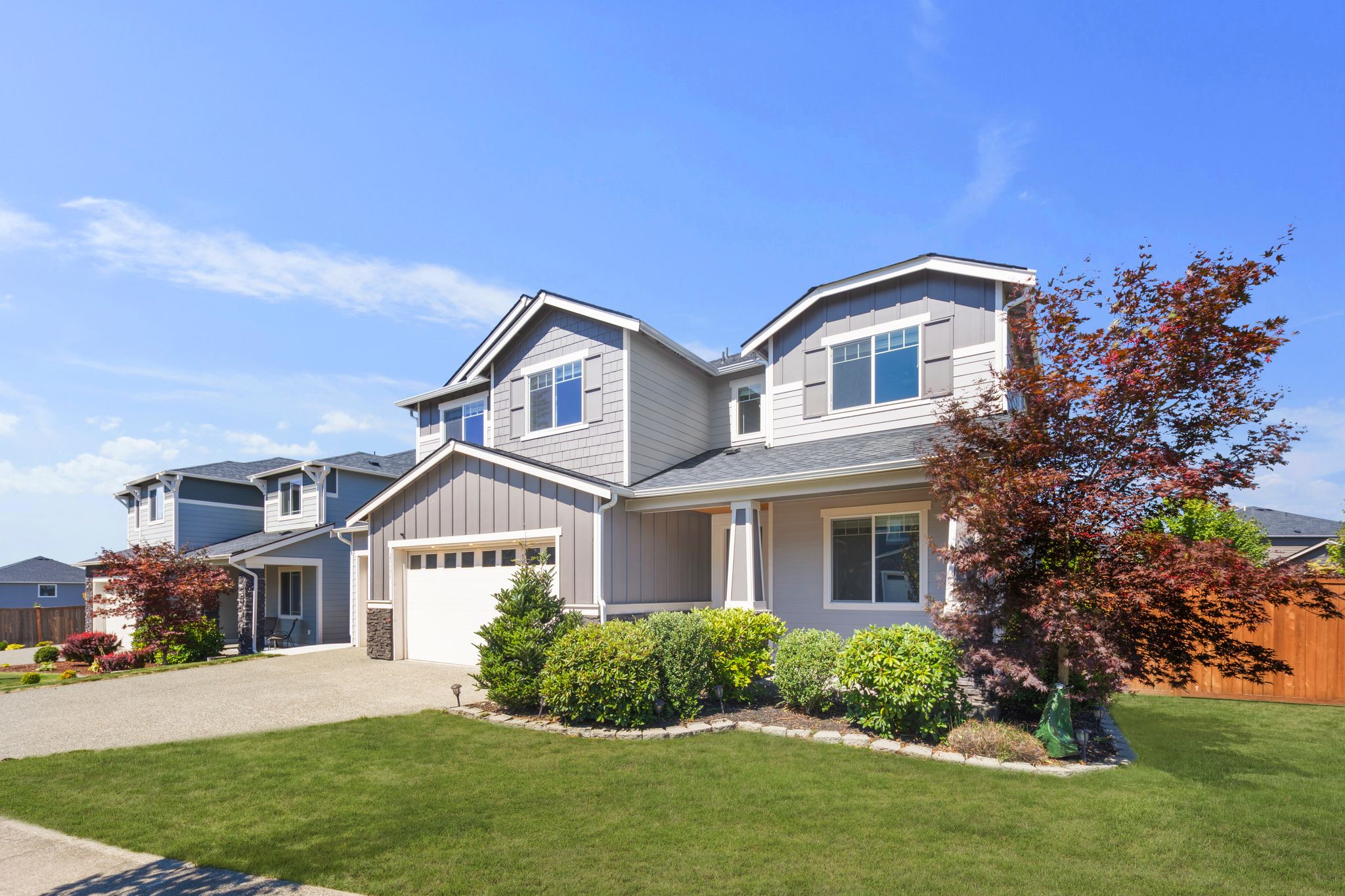
For a Bonney Lake property, focus on that lot. Don't assume the whole neighborhood drains the same way. Notice driveway slope, lower spots in the yard, and how the home sits relative to the ground. Don't walk through standing water, climb on a roof, or open drainage structures.
What should you look for inside?
Visible staining, peeling finishes, damp areas, and musty smells are reasons to ask questions. They aren't enough on their own to tell you whether a leak is active, whether a past repair worked, or what a fix would cost. Ask what the seller knows, request available repair records, and point out the exact spot to your inspector.
Window moisture deserves the same care. The EPA explains that condensation can form when moist indoor air meets a cold surface—so moisture on the inside of a window isn't automatically rain leaking through. The cause needs evaluation, not a quick guess.
I'd also avoid treating "no odor" as a clean bill of health. A showing is a short visit under one set of conditions. Professional evaluation and the property's records matter more than whether everything seemed fine for twenty minutes. For more on reading inspection findings, see how to know if a home inspection uncovered a serious issue.
What can a gray day tell you about living there?
Quite a bit about your own comfort. Stand in the room where you'd work, the kitchen where you'd start the morning, or the living room where you'd spend an evening. Does the light feel okay? Where would wet coats and shoes go? Is the entrance practical when you're carrying groceries and trying to stay dry?
Those aren't inspection findings, but they're real parts of choosing a home. The house doesn't have to look like the listing photos every afternoon to be a good fit. I just want you making that choice based on how you'd actually live there—not only how it looked on a sunny visit.
What should happen if you notice a concern?
Write down the location and what you saw. With permission, take a photo that helps you explain the question later. Then talk through whether it calls for a general home inspector, a roofer, a drainage pro, or another specialist.
Your options also depend on your contract and its deadlines. An inspection or other contingency can give you a process to investigate and respond—but don't assume unlimited rights to request changes or cancel. Read the actual terms before removing protections or letting a deadline pass.
For perspective on the ownership side, my post on tools to buy as a new homeowner also makes the case for keeping some money in reserve. A useful budget leaves room for the house you're actually buying—including work qualified professionals identify.
Frequently Asked Questions
Should I cancel a showing because it's raining?
Not just for ordinary rain—it can provide useful information about drainage and everyday comfort. Unsafe travel, storms, flooding, or access issues are reasons to reschedule. Safety comes first.
Does a puddle mean bad drainage?
Not necessarily. Location, duration, and cause matter. Treat it as a question for further evaluation—not a diagnosis or a repair estimate from the curb.
Does window condensation mean the window is leaking?
No. Condensation and water intrusion are different possibilities. A qualified professional can help sort out the cause.
Can a rainy showing replace the inspection?
No. A showing doesn't evaluate hidden conditions or substitute for a professional inspection and any specialist follow-up.
Let's look beyond the listing photos
Buying in Bonney Lake, Buckley, Lake Tapps, or nearby and want help thinking through a home's fit and the questions to ask? Book a time with me here. Don't see a time that works? Reply—we'll find one.
Larissa Butler is a licensed real estate broker with Keller Williams Realty Puyallup (License #129015), licensed since 2017, serving Auburn, Bonney Lake, Buckley, Lake Tapps, and surrounding communities throughout South King County and Pierce County, Washington.

Larissa Butler
| Larissa Butler Realty | Keller Williams Realty Puyallup
or another way